Retaining Walls Built For Slope, Drainage & Life
BullRok designs and builds retaining walls across Utah for steep slopes, drainage control, erosion protection, and usable outdoor space. Engineered for Utah soils and built to last.
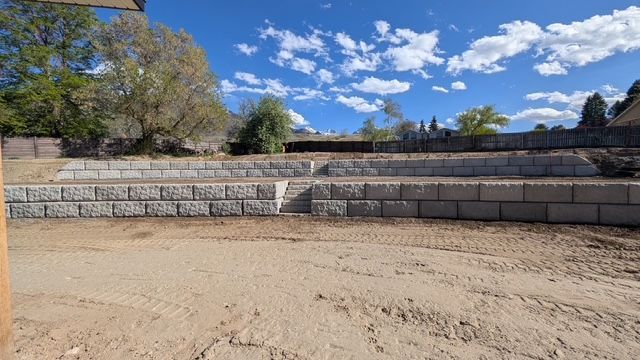
Utah Retaining Walls Built For Slope, Drainage & Soil Stability
Retaining walls in Utah are rarely just decorative. Across the Wasatch Front, they are often critical structural systems designed to stabilize slopes, manage drainage, prevent erosion, and create usable property space on steep terrain.
Utah soils create unique challenges. Expansive clay near valley floors, rocky alluvial material near the bench, freeze-thaw cycles during winter, and seasonal runoff all affect retaining wall performance.
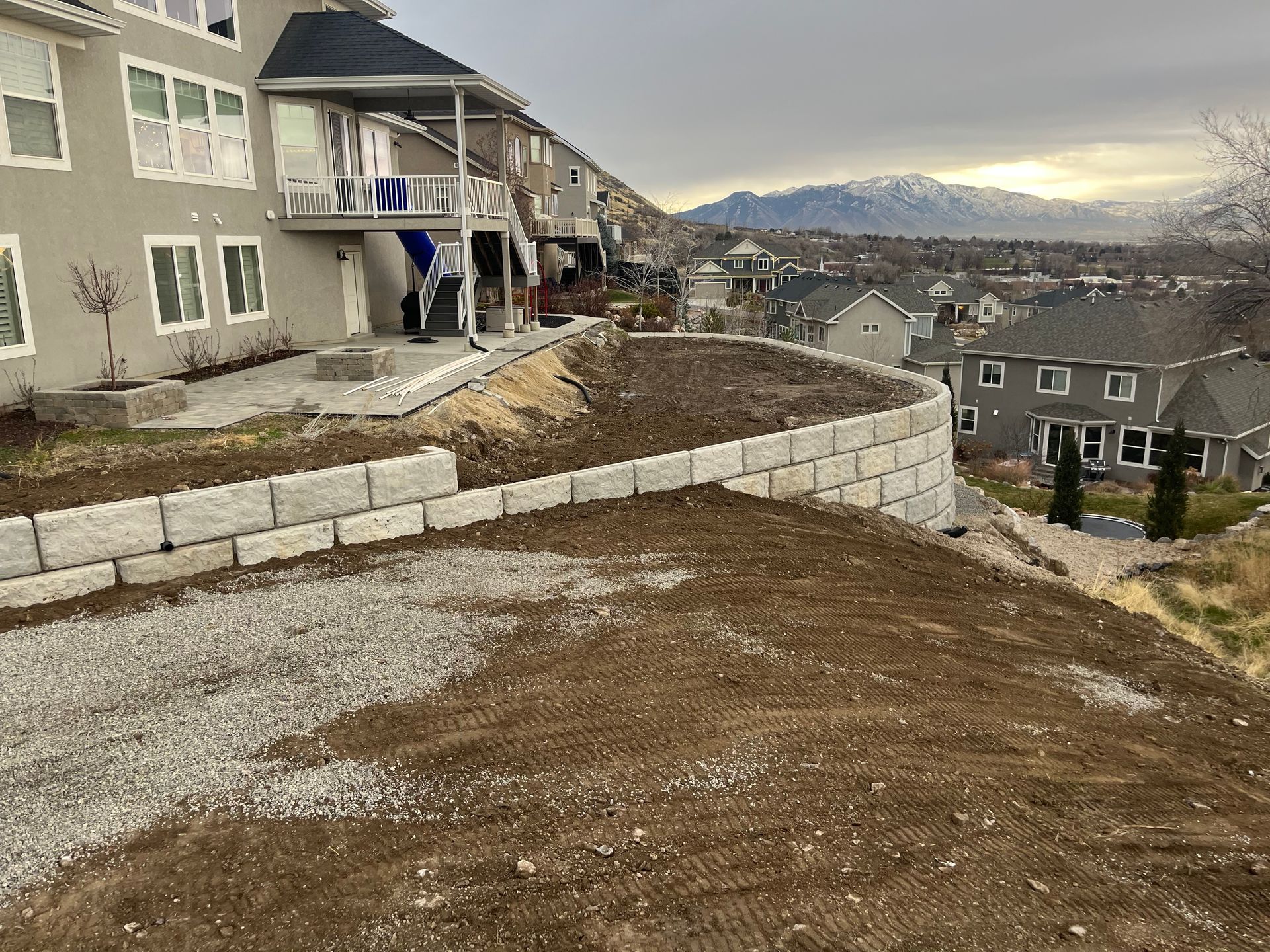
Retaining Wall Types We Build In Utah
Engineered retaining wall systems for Utah hillsides, drainage control, slope stabilization, and outdoor living spaces.
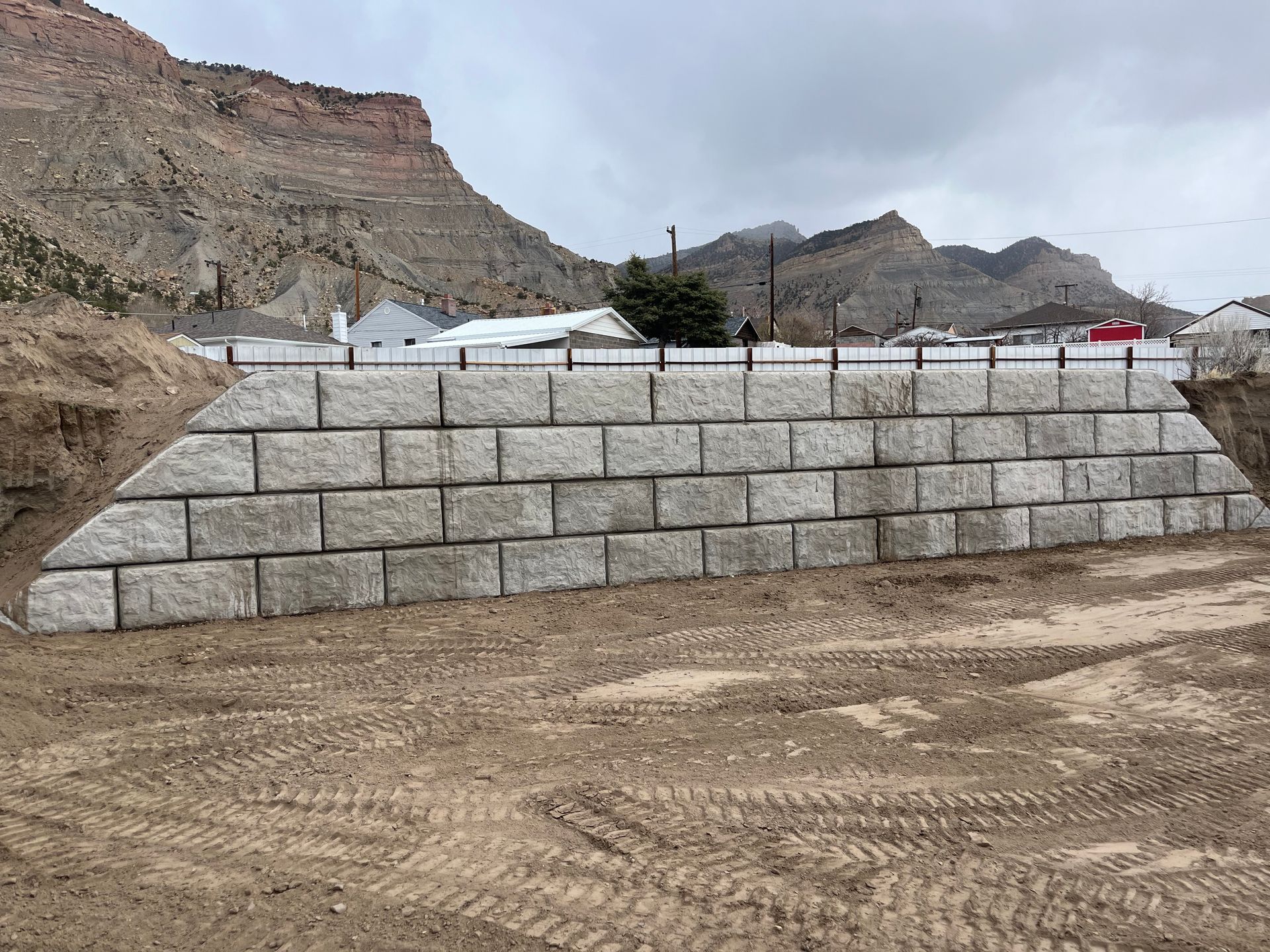
Concrete Block Retaining Walls
Engineered segmental retaining wall systems built for Utah freeze-thaw cycles, steep slopes, hillside lots, and long-term durability.
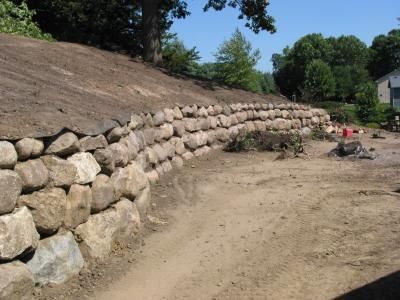
Boulder Retaining Walls
Natural stone retaining walls that blend with Utah mountain terrain while providing heavy-duty slope stabilization and drainage control.
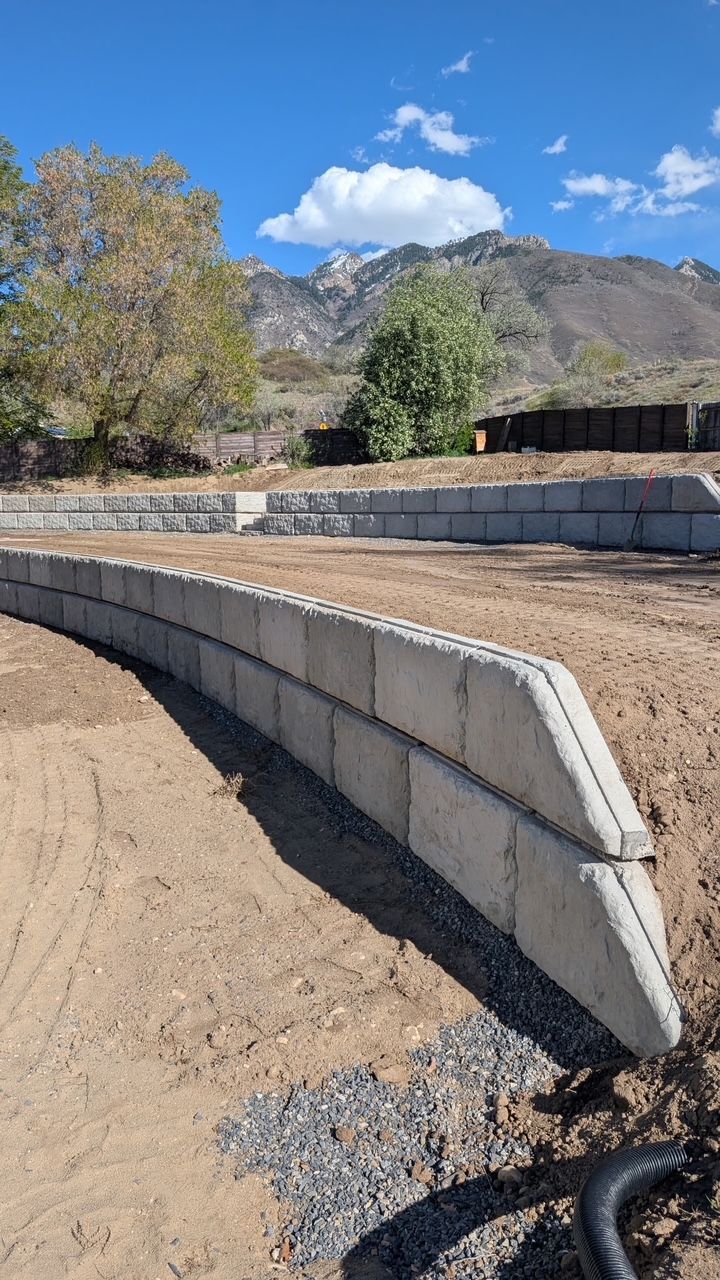
Tiered Hillside Walls
Multi-level retaining systems for large elevation changes common throughout Utah hillside developments and steep residential properties.
Drainage Is The Most Important Part Of Any Retaining Wall
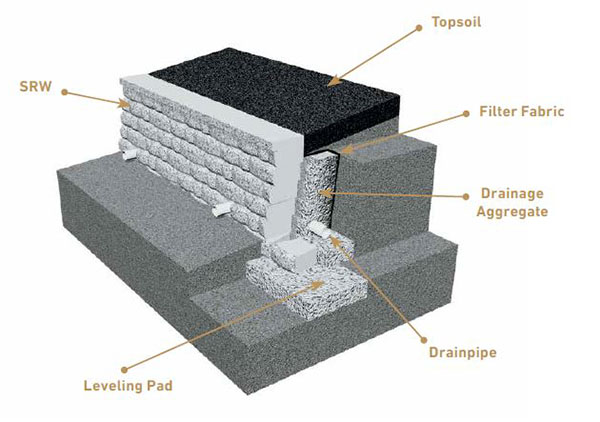
Most retaining wall failures happen because water pressure builds behind the wall. BullRok installs proper drainage systems, compacted drainage rock, and runoff management engineered specifically for Utah conditions and freeze-thaw cycles.
- Drain pipe systems
- Compacted drainage rock
- Geogrid reinforcement
- Proper slope grading
- Surface water management
- Drainage exits & runoff control
Utah Freeze-Thaw Cycles Make Drainage Critical
Water trapped behind retaining walls expands during freezing temperatures, increasing hydrostatic pressure and accelerating wall movement. Proper drainage dramatically improves wall lifespan and structural stability.
Utah Soil Conditions & Retaining Wall Engineering
Clay Soils
Valley areas near Utah Lake and lower elevations often contain expansive clay soils that swell and contract with moisture changes.
Rocky Alluvial Soils
Bench and hillside properties near the Wasatch Front frequently contain rocky limestone and quartzite material requiring excavation equipment.
Steep Hillside Terrain
Many Utah properties require engineered retaining wall systems due to aggressive slope changes and erosion potential.
Our Retaining Wall Process
Free Site Consultation
We inspect your slope, drainage, soil conditions, access, and elevation changes.
Engineering & Wall Design
We determine wall type, drainage strategy, reinforcement, and permitting considerations.
Excavation & Base Prep
Proper footing excavation and compaction are critical for long-term wall stability.
Wall Construction
Drainage systems, reinforcement, and wall construction are installed correctly.
Final Grading & Cleanup
We ensure proper runoff flow, site stabilization, and complete project cleanup.
Retaining Wall FAQ
How much does a retaining wall cost in Utah?
Pricing depends on wall height, drainage requirements, soil conditions, equipment access, and material type.
Do retaining walls require drainage?
Yes. Proper drainage is one of the most important parts of retaining wall construction.
Do I need a permit for a retaining wall in Utah?
Many Utah cities require permits or engineering depending on wall height and site conditions.
What retaining wall type is best for steep slopes?
It depends on height, drainage, access, and soil conditions. Concrete block systems and boulder walls are both common for Utah hillside properties.